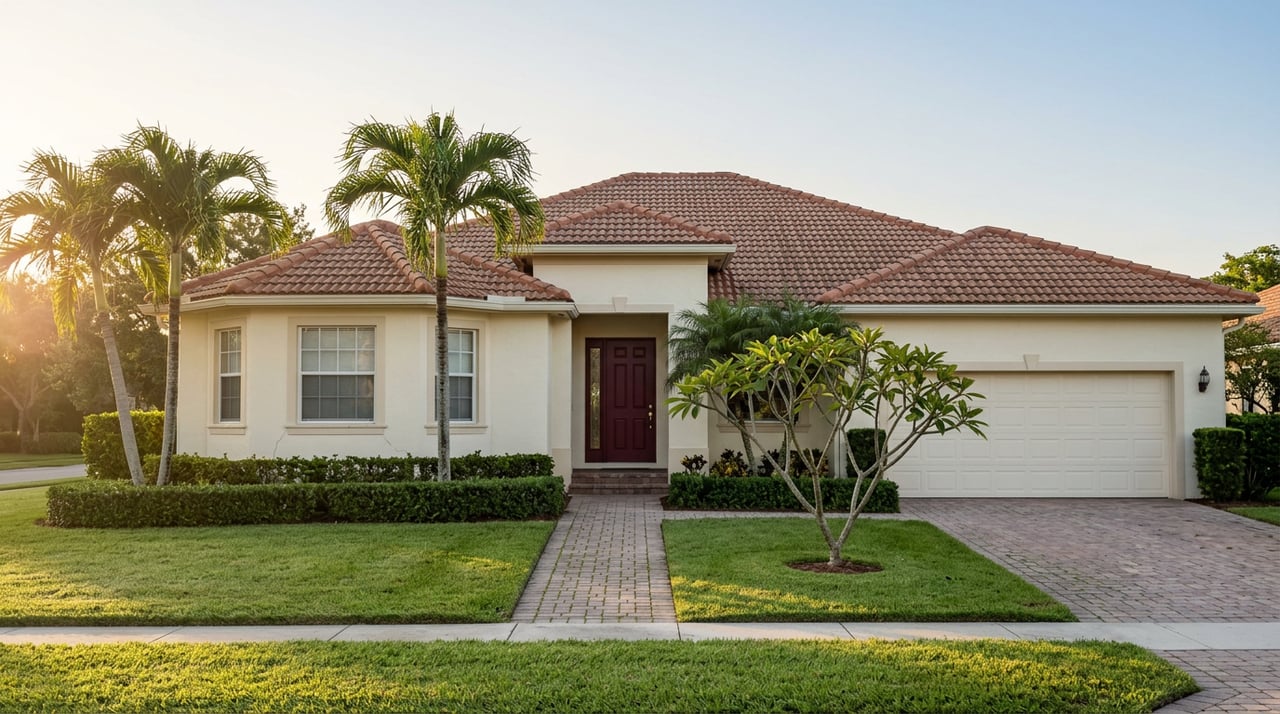
Drive south on Old Cutler Road from Palmetto Bay into Cutler Bay and nothing about the landscape changes. Same canals, same tree canopy, same distance to Biscayne Bay, same hurricane season. Two homes a few blocks apart, built the same year, sitting in the same FEMA flood zone, can carry meaningfully different flood insurance bills. The difference has nothing to do with elevation, storm surge maps, or which canal the house backs up to. It comes down to a FEMA program most homeowners have never heard of, and how hard each town's public works department has worked to satisfy it.
That program is called the Community Rating System, and it just moved in Palmetto Bay's favor. It moved further, faster, and earlier in Cutler Bay.
What CRS Actually Measures
The Community Rating System, run through the National Flood Insurance Program, has nothing to do with any single property. It grades the town. FEMA scores each participating municipality on nineteen categories of floodplain management work, things like stormwater infrastructure, public outreach, mapping accuracy, and building code enforcement, and assigns a class from 1 to 10. Class 10 means a town isn't participating and gets no discount. Class 1, the best possible score, earns residents a 45 percent discount on flood insurance premiums. Every step down from 10 to 1 is worth another 5 percent, applied automatically to eligible NFIP policies.
So the discount on your flood insurance bill is really a discount on your town's paperwork. Your house's actual flood risk, its elevation, its distance to water, still sets the baseline premium under FEMA's current pricing model. The CRS class is the percentage taken off that baseline. Two towns with identical flood exposure can hand their residents very different final numbers, because one town's floodplain office has logged more credit points than the other's.
The Gap, By the Numbers
| Municipality | Current CRS Class | SFHA Discount | Effective Date | Trajectory |
|---|---|---|---|---|
| Cutler Bay | Class 3 | 35% | April 1, 2023 | Class 6 (2011) → Class 4 (2019) → Class 3 (2023) |
| Palmetto Bay | Class 5 | 25% | April 1, 2025 | Class 8 (2017) → Class 7 → Class 5 (2025) |
| Pinecrest | Improving | Not yet published | Village announcement September 15, 2026 | In progress |
Ten percentage points separate Palmetto Bay's current discount from Cutler Bay's. That gap is the entire thesis of this piece. It is not a gap in flood risk. It is a gap in how long each town has been grinding through FEMA's credit system, and how much it has invested in doing so.
Twelve Years of Paperwork in Cutler Bay
Cutler Bay entered the Community Rating System as a Class 6 community in 2011. By October 2019 it had climbed to Class 4, a 30 percent discount that the town calculated would save policyholders an average of $248 per flood insurance policy each year, or roughly $1.8 million town-wide annually. Four years later, in April 2023, Cutler Bay reached Class 3, becoming the first municipality in Broward, Miami-Dade, or Monroe County to get there and one of only eleven communities nationwide at that classification. The jump from Class 4 to Class 3 was worth another $338 per policy on average, close to $2.4 million a year across the town.
Mayor Tim Meerbott framed the achievement in terms of what it meant for the town's checkbook, not its coastline, noting that "our residents and local businesses will benefit from saving 35% on their flood insurance premiums." That framing matters. Nobody in Cutler Bay got safer from flooding overnight when the class changed. What changed was a documented record of watershed planning, drainage maintenance, and open-space preservation that FEMA had been tracking since 2011.
Palmetto Bay's Own Climb
Palmetto Bay's version of that same story started later and moved on a shorter track. The Village joined the Community Rating System in 2017, entering as a Class 8 community and giving residents a 10 percent discount. It has since improved twice, first to Class 7, and most recently to Class 5, effective for any NFIP policy issued or renewed on or after April 1, 2025. For a resident whose flood policy was still carrying the old Class 7 rate, that jump to Class 5 is worth a net 10 percentage points back on the premium, the difference between a 15 percent discount and a 25 percent one.
Twenty-five percent is a real improvement. It is also still ten points short of what a Cutler Bay homeowner gets on a comparably risky property. Palmetto Bay's floodplain management office has clearly been active since 2017, but Cutler Bay has been building its record since 2011 and has six additional years of credit points to show for it.
Pinecrest Is Already Moving Too
The competitive pressure isn't limited to these two towns. The Village of Pinecrest posted a bulletin titled "Flood Insurance Reduction" on its own communications page on September 15, 2026, just days before this was written. The specific new class figure wasn't part of the announcement's public summary, but the timing confirms the same recalibration playing out a few miles north of Palmetto Bay. Every town in this corridor is working the same FEMA scorecard, on its own schedule, with its own results.
What This Means If You're Comparing Neighborhoods
A buyer weighing Palmetto Bay against Cutler Bay or Pinecrest is usually comparing school zones, lot sizes, and list prices. Almost nobody is comparing CRS class, because almost nobody outside a floodplain management office knows it exists. But it is a real, recurring line item, and it doesn't show up on a listing sheet.
Before assuming insurance costs will track evenly across these towns, it's worth asking a few direct questions:
- What is the town or village's current CRS class, not just the property's FEMA flood zone letter? The zone measures the land. The class measures the town.
- When was that class last verified? FEMA reviews communities on three or five year cycles depending on class, so a rating can move in either direction at the next review.
- Does the discount apply inside the Special Flood Hazard Area only, or does the town also pass along a smaller discount to non-SFHA, Standard X Zone policies? Palmetto Bay currently applies a 10 percent discount to X Zone policies and 5 percent to preferred risk policies, on top of the 25 percent SFHA rate.
None of this replaces a conversation with an insurance agent who can pull an actual quote for a specific address. But knowing that the town itself is a variable, not just the parcel, changes the questions worth asking before you write an offer.
Does my home's individual flood zone still matter if my town has a strong CRS class? Yes. The CRS discount is a percentage taken off the property's underlying risk-based premium. A home in a high-risk AE zone will still cost more to insure than one in a lower-risk X zone in the same town. The town's class lowers both numbers by the same percentage, it doesn't erase the difference between them.
Can a town's CRS class get worse? It can. Classes are reassigned at recertification, and a town that falls behind on documentation, drainage maintenance, or repetitive-loss property requirements can be downgraded, which raises premiums back up at the next renewal cycle.
Where do I check a town's current class before making an offer? Contact the municipality's building or floodplain management department directly. Palmetto Bay, Cutler Bay, and Pinecrest each maintain their own CRS information on their village or town websites, and FEMA maintains a national list of participating communities and their current classes as well.
The towns along this stretch of South Dade share a coastline, a hurricane season, and a lot of the same architecture. They do not share the same flood insurance math, and that gap is worth understanding before it shows up in a closing disclosure.
If you're comparing carrying costs across Palmetto Bay, Cutler Bay, or Pinecrest as part of a larger move, Pam Mayers can walk through what a specific address's flood zone, insurance history, and town CRS status actually mean for your budget. Let's Connect — Schedule a Consultation.
