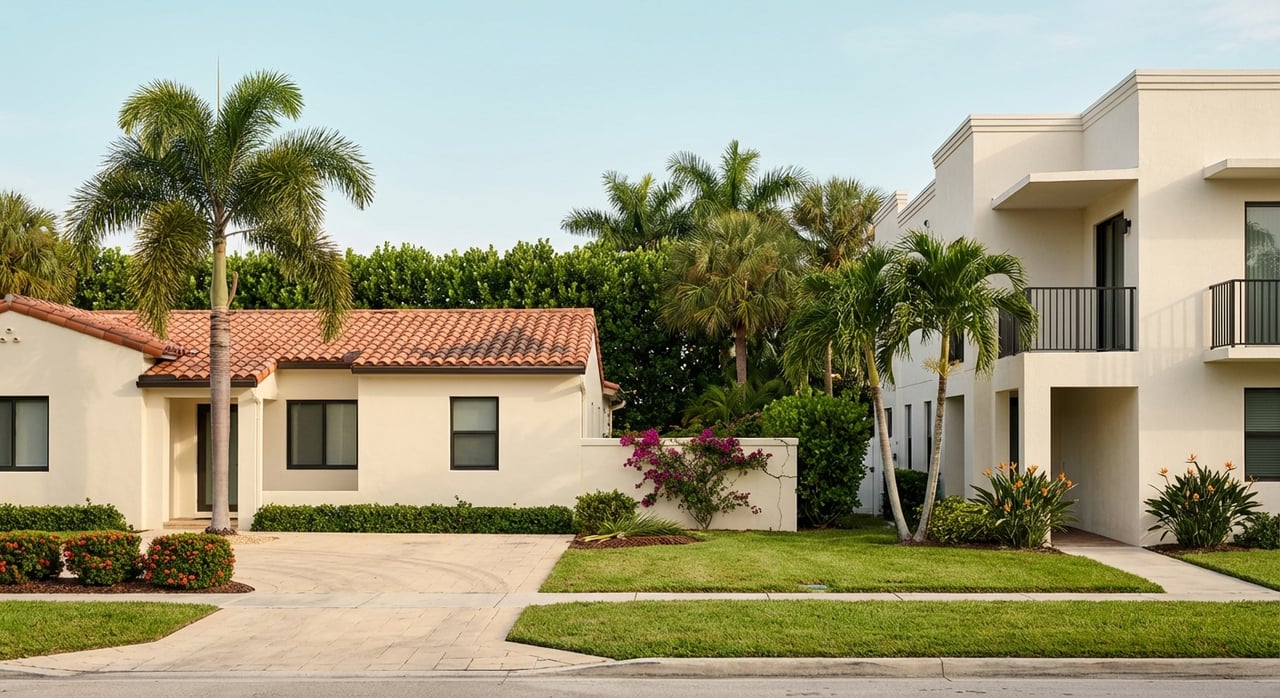
Trying to choose between a low‑maintenance condo and a single‑family home with a yard in Kendall? The right answer depends on how you want to live, what you want to spend each month, and how much responsibility you want to carry for upkeep. In this guide, you’ll quickly see the core trade‑offs on cost, maintenance, lifestyle, and financing, plus realistic Kendall price bands as of early 2026. You’ll also get a simple due‑diligence checklist tailored to Miami‑Dade rules so you can shop with confidence. Let’s dive in.
Kendall market snapshot: price ranges, not one “median”
Different sources define “Kendall” differently and track different mixes of homes, so medians vary. As of late 2025 to early 2026, broad indexes show Kendall’s average home value around the low‑to‑mid $500Ks, while some listing medians appear in the mid‑$400Ks. Within Kendall’s ZIP codes, medians can range from the mid‑$300Ks to the $800Ks depending on subarea. The takeaway: look at ZIP‑level data and very recent comps on the specific block you like, and always note the date of any number you use.
Monthly cost: condo vs. single‑family
HOA fees and what they cover
- Condos and townhomes: Expect a monthly association fee that varies by building and amenities. In mainland Miami areas, small or lightly amenitized buildings often run in the $200s to $500s per month. Larger or amenity‑heavy buildings can be much higher, sometimes hundreds more per month. Compare fees per square foot and review the association’s reserve history, not just the headline number.
- Single‑family homes: Some subdivisions have modest HOA fees, often closer to the $100 to $300 per month range. You will budget separately for lawn care, exterior maintenance, roof, pool, and pest control. A common rule of thumb is to set aside about 1 percent of the home’s value per year for maintenance.
Insurance and taxes in Florida
Florida homeowners insurance has been among the highest in the country due to storm and flood risk. State reforms announced rate relief heading into 2026, but your premium will still vary widely by property type and exposure. Condo owners usually buy an HO‑6 policy for the unit interior because the association carries a master policy. Single‑family owners carry a full HO‑3 or HO‑5 policy for the entire structure. Flood insurance is separate and required when a lender determines the property is in a FEMA Special Flood Hazard Area. Get quotes early and use real addresses so you can compare apples to apples. You can review the state’s recent actions in the governor’s update on insurance rate relief for 2026.
Taxes and monthly payment
Property taxes will reflect purchase price and exemptions you qualify for. When you compare options, tally principal, interest, taxes, insurance, HOA fees, and your estimated maintenance set‑asides to see your true monthly number.
Maintenance and assessments
Condos: lower chores, higher association risk
With condo ownership, the association manages exterior items like structure, roof, common areas, elevators, and pools. That saves you time, but your risk is pooled. If reserves are too low or major repairs surface, owners can face special assessments. After the 2021 Surfside collapse, Miami‑Dade accelerated inspection and recertification timelines for many buildings. Before you buy, review recent reserve studies, budgets, meeting minutes, and any recertification reports or repair notices. Learn about county milestone and recertification requirements on Miami‑Dade’s building recertification page.
Single‑family homes: control and responsibility
You control vendor choice and timing, but all capital items are yours. Roof, HVAC, pool equipment, and exterior paint or stucco can be meaningful line items. A thorough inspection plus realistic contractor estimates will tell you whether a seemingly lower monthly payment today could lead to higher out‑of‑pocket costs soon.
Space, privacy, and amenities
- Single‑family homes: You typically get a private yard, a driveway or garage, and no shared walls. That can be a better fit if you want outdoor space for pets, gardening, or entertaining.
- Condos and townhomes: You trade some privacy for convenience and amenities. Many buildings offer pools, gyms, security, and on‑site management. If you want to lock and leave with fewer exterior chores, this lifestyle can be a strong match.
Flexibility, rentals, and financing
Condo project lending rules
Many lenders apply project‑level rules to condos. They look at reserves, owner‑occupancy, delinquency rates, litigation, and the share of commercial space. Projects that do not meet these standards can be harder to finance and may limit the future buyer pool. If you plan to use a conventional, FHA, or VA loan, ask your lender early whether the building meets program requirements. Freddie Mac’s guidance outlines common condo project red flags and eligibility details in its Condo Project Advisor FAQ.
Rental rules to check
Condo associations often limit rental frequency or set minimum lease terms. Some cap the share of units that can be leased at any time. Single‑family neighborhoods may also have HOA rules, but they usually offer more flexibility unless explicitly restricted. If renting is part of your plan, read the association’s rules closely. For a plain‑English primer on condo ownership basics, see Bankrate’s overview of what a condo is and how it works.
What your budget buys in Kendall (Jan 2026)
Prices vary by ZIP code, street, and building, so use this as a directional guide and verify with live comps.
- Condos: Often 1 to 2 bedrooms, roughly 600 to 1,200 square feet. Many older mid‑rise units list in the low‑$200Ks to mid‑$300Ks. Newer or larger units can price higher.
- Townhomes: Frequently 2 to 3 bedrooms and 1,000 to 1,700 square feet. List prices commonly run from the high‑$300Ks to the mid‑$500Ks depending on size, age, and location.
- Single‑family homes: A broad band. Smaller or older homes in many Kendall pockets often list in the mid‑$400Ks to $700Ks. Renovated homes, larger lots, or premium enclaves can reach $1M and above.
The big idea: Kendall is hyper‑local. ZIP‑level medians and building‑specific details will shape your options more than any single “Kendall average.” Date your data, then compare specific blocks and buildings.
Due‑diligence checklist for Kendall buyers
Use this quick list to protect your budget and reduce surprises.
- Get the full condo or HOA packet: budget, reserve study, balance sheet, meeting minutes, insurance declarations, rental policy, and any special‑assessment notices. Lenders often scrutinize reserves, owner‑occupancy, and delinquency. See typical lender considerations in Freddie Mac’s condominium mortgage FAQ.
- Check Miami‑Dade building recertification status: If the building is approaching or within a milestone inspection window, read the structural and electrical reports and repair timelines. Start with the county’s recertification program page.
- Verify flood exposure: Confirm the FEMA flood zone and whether the association carries a master flood policy (often called an RCBAP). Miami‑Dade’s GIS includes flood layer references. If the property is in a Special Flood Hazard Area, get quotes early for both building and interior coverage.
- Confirm lender acceptance: Ask your lender to check whether the condo project is eligible for your loan program and whether any reserve, delinquency, or litigation items could block approval. Freddie Mac’s project eligibility FAQ outlines typical thresholds.
- For single‑family homes: Order a thorough inspection. Ask for roof age, HVAC condition, pool equipment and surface status, drainage, and any visible settlement. Pull recent permit history and get contractor estimates for near‑term items so you can budget accurately.
Which option fits your goals
Choose a condo if you want
- Lower exterior maintenance and on‑site amenities like a pool or gym.
- A lock‑and‑leave lifestyle with less time spent on yard and exterior upkeep.
- A potentially lower entry price compared with a similar‑location single‑family home.
- To accept association rules and the need to review reserves, recertification, and rental limits.
Choose a single‑family home if you want
- A private yard, no shared walls, and more control over renovations and exterior choices.
- Space to grow or add features over time, subject to local code and HOA rules if applicable.
- Fewer project‑level financing constraints when you sell, since detached homes are not subject to condo project approval.
- To budget for bigger capital items yourself, including roof, HVAC, and exterior maintenance.
How to decide with confidence
Start by mapping your monthly comfort number, then try both paths. Tour a condo and a single‑family home in the same ZIP code on the same day so you can compare lifestyle and costs side by side. Ask your lender to quote payments for each property type, including estimated insurance and taxes, and add HOA fees and a realistic maintenance reserve to see the true monthly difference. Finally, for any condo shortlist, pull the association documents and recertification details early so financing and future resale do not surprise you.
If you want local, block‑by‑block insight on Kendall’s micro‑markets and a clear budget comparison, connect with Pam Mayers for a calm, data‑forward consultation tailored to your goals.
FAQs
What are typical Kendall condo HOA fees and how do they affect my payment?
- Many mainland condo fees range from the $200s to $500s per month for smaller or less amenitized buildings, with higher fees in amenity‑heavy buildings, so add the fee to principal, interest, taxes, and insurance to find your true monthly cost.
How do Florida’s 2026 insurance changes impact condo vs. single‑family costs?
- State reforms signaled rate relief in 2026, but premiums still vary by property type and risk; condo owners carry an HO‑6 while single‑family owners carry full structure coverage, so get quotes early using the exact address and coverage type listed in the state’s insurance update.
What should I review in a Miami‑Dade condo association before buying?
- Request the budget, reserve study, balance sheet, meeting minutes, insurance declarations, recertification reports, and any special‑assessment notices, then ask your lender to confirm project eligibility per Freddie Mac’s condo guidance.
How can I check if a Kendall property is in a flood zone?
- Use Miami‑Dade’s GIS flood layers for a quick read and ask whether the association carries a master flood policy; the county maintains flood layer references you can discuss with your insurance agent.
Are Kendall condos harder to finance than single‑family homes?
- Sometimes, because lenders review condo projects for reserves, owner‑occupancy, delinquencies, litigation, and commercial space, and non‑warrantable projects can limit loan options, as outlined in Freddie Mac’s condo FAQs.
