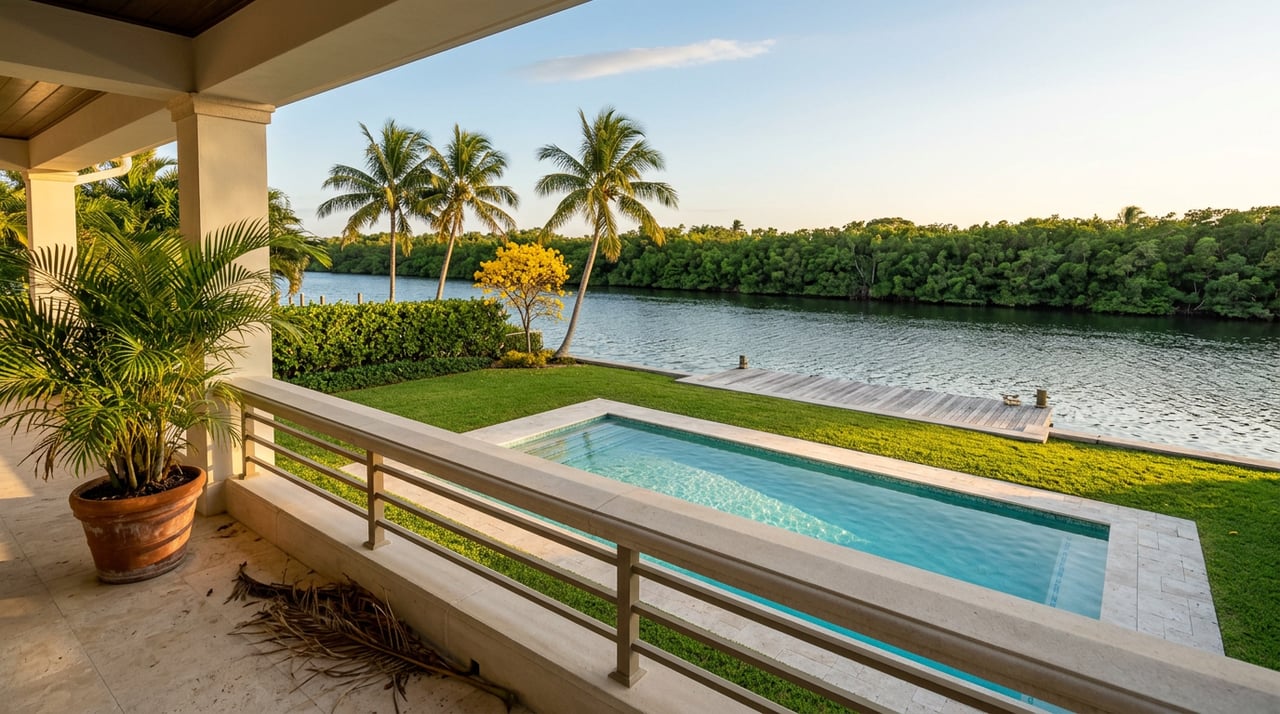
Picture two canal-front homes in Cutler Bay, same era of construction, same three-bedroom layout, same asking price within a few thousand dollars. List them both this fall and they can move at completely different speeds, and the gap has almost nothing to do with the condition of either wall.
It has to do with which water touches the dock.
That distinction sounds like a technicality. In Cutler Bay, it is the single fact that determines how fast a seawall problem can be fixed, who has to sign off on the fix, and whether a buyer's financing timeline survives the wait. Most sellers find this out the hard way, partway through a transaction, when a buyer's inspector asks a question nobody thought to answer before listing.
The wall isn't the question. The water is.
Cutler Bay was built around water on purpose. The town's own Growth Management Plan lays out the geography plainly: it is traversed by the Black Creek Canal (C-1), the C-100 Canal, and the DA-4 Canal, and those three waterways are not all owned by the same authority. The South Florida Water Management District owns and operates the C-1 and C-100 canals. Miami-Dade County owns and operates DA-4. Add in the fact that some of the water bodies inside Lakes by the Bay are interior lakes rather than tidal canals connected to Biscayne Bay, and you get a town where two homes a few streets apart can face completely different regulatory paths for the exact same kind of seawall repair.
Work in tidal water generally needs a Miami-Dade DERM Class I Coastal Permit on top of structural review from the Town of Cutler Bay Building Department. Work on a private, non-tidal lake often does not trigger that county-level review at all. The tidal-versus-interior-lake determination has to be made before anyone files anything, because it changes which agency you're dealing with and how long the process takes.
If you're planning to sell a canal or lakefront home here, that determination is the first thing to nail down, not the last.
Two neighborhoods, two timelines
Cutler Bay's waterfront housing stock didn't arrive all at once, and the era a section was built in tracks closely with which water type it sits on.
| Neighborhood | Built | Water Type | First Call for Waterfront Work |
|---|---|---|---|
| Saga Bay | Developed in the 1970s, per the Town's Growth Management Plan | Canal grid connecting toward Biscayne Bay, carrying tidal influence | Town Building Department, likely with DERM Class I review |
| Lakes by the Bay | Began development in the 1980s and has continued since | A mix of canals and interior, non-tidal lakes | Town Building Department first, DERM only if the specific water body is tidal |
| Cutler Cay | One of the town's newer planned residential neighborhoods | Planned-community canals and lakes | Town Building Department, permitting path confirmed per lot |
The practical takeaway for a seller: don't assume your neighbor's timeline is your timeline, even if you live three doors down. Confirm which regime applies to your specific shoreline before you list, not after a buyer's inspector raises the question during their contingency period.
What waiting actually costs
Seawalls in Cutler Bay tend to fail in the same patient, predictable way: tidal action pumps soil out through joints grain by grain, showing up first as a soft strip in the lawn, and concrete caps poured in the 1970s through 1990s are now deep into decades of salt exposure. Caught early, at the rust-stain stage, a repair stays sectional and inexpensive. Left alone, it becomes a structural conversation during someone's home inspection period, which is the worst possible time to have it.
County-typical repair costs run $100 to $250 per linear foot, with permits adding another $500 to $2,000 depending on scope. Qualifying cap and tieback repairs can move through Miami-Dade's roughly 10-day expedited authorization, but that clock only starts once the tidal-versus-lake determination is settled and the paperwork is in the right hands.
There is a genuine upside buried in this timeline pressure. Because Saga Bay and Lakes by the Bay were built out in coordinated phases, seawalls along a given canal tend to age in cohorts. Neighbors who schedule inspections together, or bundle repair work, split mobilization costs and often land meaningfully lower per-home pricing than a single owner calling a contractor in isolation. If your HOA newsletter has mentioned a seawall inspection push, that's worth reading closely before you assume the cost is yours alone to carry.
The disclosure floor is lower than most sellers think
Florida law sets a minimum standard for what a seller has to say, and it doesn't mention seawalls by name. Since October 1, 2024, Florida Statute 689.302 has required sellers of residential property to give buyers a written flood disclosure at or before the sales contract is signed. That form asks three narrow questions: whether the seller has ever filed an insurance claim for flood damage, whether the seller has received government or private flood assistance, and whether the seller knows of flooding that damaged the property during their ownership. The law was expanded again on October 1, 2025, adding separate disclosure duties for landlords and condo developers, but the core form still says nothing about the age of a wall's tiebacks or when it was last inspected.
That gap doesn't mean silence is safe. Florida's older common-law rule, the one courts still apply under Johnson v. Davis, requires sellers to disclose known material facts that affect value and aren't obvious to a buyer walking the property. A visibly leaning or cracked seawall likely qualifies under that standard even though the statutory form never asks about it directly. A wall that looks fine from the lanai but hasn't been inspected in over a decade sits in a gray zone that plenty of sellers convince themselves they can skip past. It's a decision worth making with a report in hand rather than a guess.
Boat traffic runs its own clock
If your lot backs onto a bay-access channel near Black Point Marina, weekend boat traffic adds a second variable most owners never think to model. Wake loading on walls along those routes runs measurably above what a quiet interior canal experiences, which accelerates joint fatigue and toe wear. The general guidance for channel-adjacent walls is a two-year inspection cycle rather than the longer interval that works fine on a calmer canal further from the marina's main channel.
None of this is new stress on Cutler Bay's shoreline. Hurricane Andrew crossed this ground at historic strength in 1992, back when the area was still unincorporated Cutler Ridge, and Saga Bay in particular was tested hard by that storm before the town rebuilt around the lessons it left behind. Cutler Bay didn't incorporate as its own municipality until November 9, 2005, becoming the 35th town in Miami-Dade County. Everything built before that storm carries decades of salt exposure on top of whatever the marina traffic adds today. That combination is exactly why a pre-listing inspection matters more here than in a neighborhood without the same water history.
What this means if you're listing now
Start with the determination, not the wall. Find out whether your specific shoreline is tidal or interior lake before you call anyone. If you're in Saga Bay, an established lake community with its own property owners association managing amenities off Old Cutler Road, that answer is usually clear from the community's own records. If you're in Lakes by the Bay, confirm it lot by lot, because the community includes both types of water.
Pull your permit history for any prior seawall, dock, or lift work. Buyers and their inspectors will ask, and having the paperwork ready is faster than reconstructing it under contract deadline pressure. If your wall hasn't been looked at professionally in years, schedule that inspection before you list rather than during a buyer's contingency period, so you're negotiating from a number you chose rather than one that surprised you.
And if you're one of several owners on a canal segment that's aging into the same repair window, talk to your neighbors before you talk to a contractor. The bundling savings are real, and a coordinated repair looks a lot better in a listing description than a stalled one.
Cutler Bay's waterfront is a genuine asset. It just comes with more moving regulatory parts than a single "seawall inspection" line item suggests, and knowing which parts apply to your specific lot is the difference between a smooth closing and a stalled one.
A few questions worth settling early
Does every canal-front home in Cutler Bay need a DERM permit for seawall work? No. Only work in tidal water generally requires Miami-Dade DERM's Class I Coastal Permit. Interior, non-tidal lakes inside communities like Lakes by the Bay often only need Town of Cutler Bay Building Department review. The determination has to be made per lot.
How is Saga Bay different from Lakes by the Bay for a seller? Saga Bay was developed in the 1970s around canals connecting toward Biscayne Bay, so most of its waterfront is tidal. Lakes by the Bay has continued developing since the 1980s and includes both canals and interior lakes, so the water type varies within the same community.
Does Florida's flood disclosure form cover seawall condition? Not directly. The statutory form covers flood damage history and insurance claims, not the structural condition of a wall. Sellers still carry a common-law duty to disclose known material defects that aren't obvious to a buyer, which can include a visibly compromised seawall even if the form doesn't ask about it by name.
If you're weighing a sale in Cutler Bay and want a straight read on what your specific shoreline means for timeline and pricing, Pam Mayers and the Mayers Group know this corridor lot by lot. Let's Connect — Schedule a Consultation.
